Niigata's Gangi: Joining House Eaves into Snow-Sheltered Walkways
Introduction
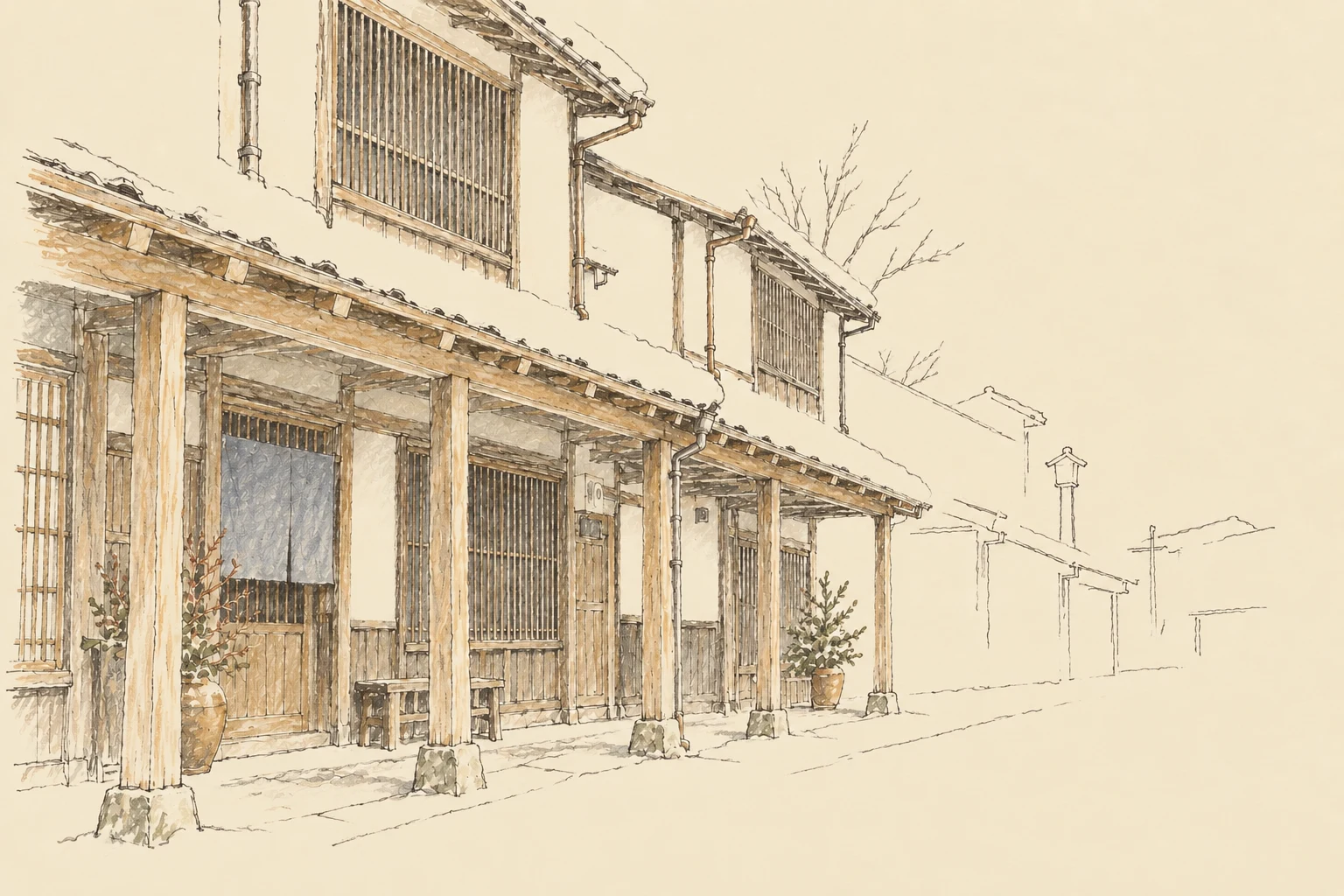
Viewed from one building, Takada's gangi is an eave; viewed along the street, it is a path. Roofs project from houses and join their neighbors, sheltering pedestrians. In this former castle town in Joetsu, southwestern Niigata, shelter from snow developed building by building.
One eave protects only a doorway. A town passage requires both roof and walkable space to continue next door. Gangi history therefore includes arrangements over building, ownership, commerce and repair costs.
1. Keep the gangi along the street when rebuilding
In 1792, a request was made in Takada to set houses farther back from the street. Town headmen petitioned the domain: if that pattern spread, the streetscape would break up and disconnected gangi would cause difficulty in snow. Even if houses could retreat, they asked that gangi remain beside the street.
Keeping an eave in its old position could preserve the passage despite a house moving back. The document records the town's request, not the domain's final decision or the buildings actually constructed. It shows that the petitioners treated one house’s rebuilding as a concern for passage along the whole street.
In the second part of Hokuetsu Seppu, an account of life in snow country, editor Santō Kyōzan, also known as Hyakuju, describes passing through Takada beneath a long succession of eaves on both sides of the street. He explains their role in winter passage, although his own Echigo journey took place in summer.
2. Passage land and maintenance costs
An administrative document from 1893, roughly a century later, examined another aspect. At the prefecture's request, the county office asked Takada Town about public or private ownership, taxation and maintenance costs.
The town described the land under gangi as ordinary taxable urban residential land, maintained at each owner's expense. The passage continued along the street, while individual households owned and maintained its land and eaves.
Users and people paying for repairs were not necessarily the same. An owner's expenditure also benefited passersby. But the 1893 response cannot establish ownership or cost sharing for every gangi today.
3. Sheltering from snow while leaving room to pass
An 1887 application to use road space asked Takada Police Station for permission to enclose winter gangi with boards. The applicants said this snow protection would not obstruct passage.
Gangi needed room for people to pass while enclosures kept out wind and snow.
The January 1, 1959 issue of Takada's municipal bulletin called for improvements because merchandise and other objects beneath gangi obstructed pedestrians. Keeping the roof did not automatically keep the passage usable.
4. Preservation and walkability together
Joetsu City offers assistance toward improvement costs for people and organizations preserving gangi. This supports work otherwise paid for by building owners. Eligible work and application periods need checking in each year's guidance.
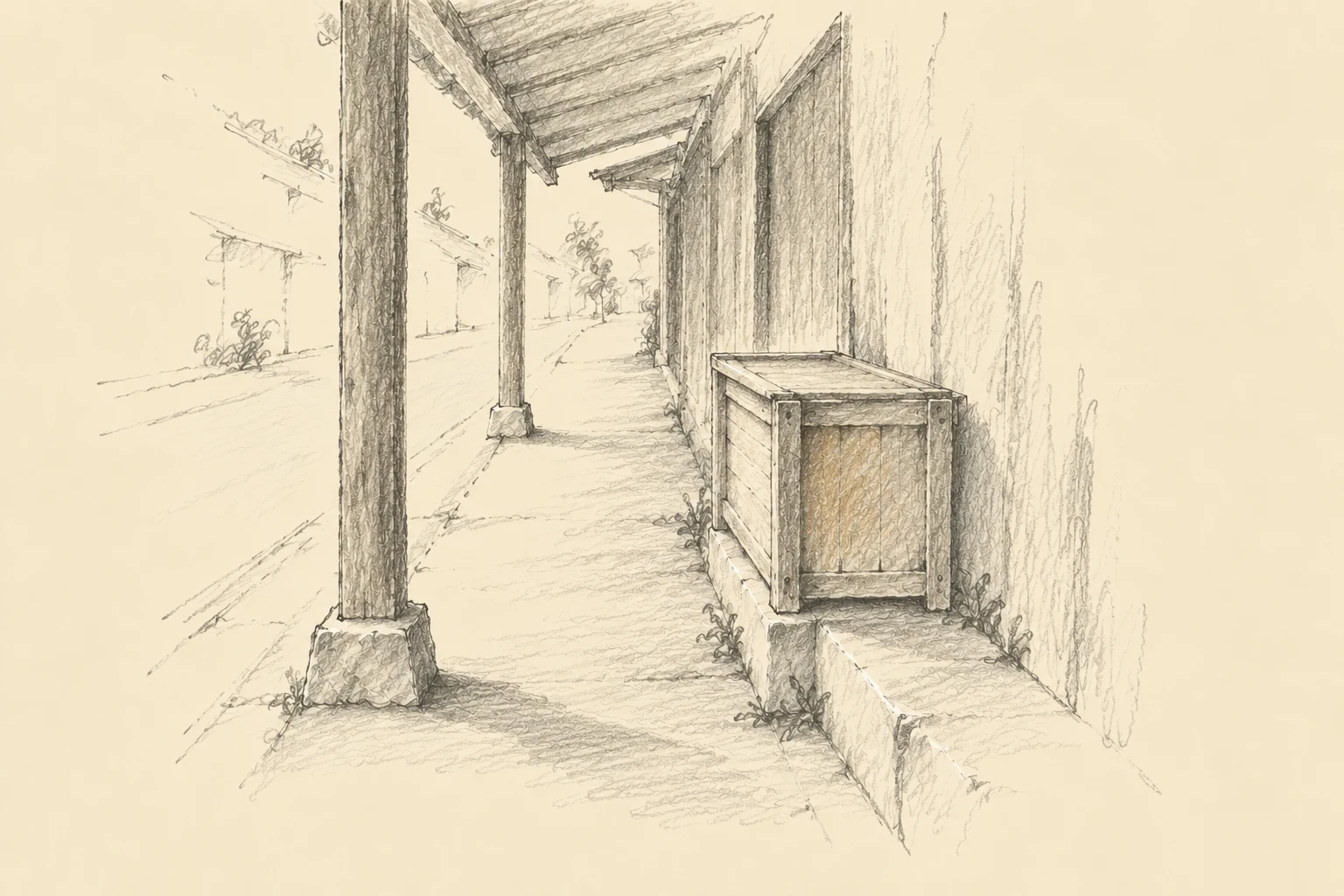
Preserving gangi requires attention to ground-level steps, junctions with neighbors and usable width as well as roofs. A street walkable in snow depends on individual buildings and their daily management connecting with one another.
References
- 上越市公文書センター「雁木の話あれこれ」、2020年7月2日更新。展示ページ。
- 上越市公文書センター「雁木の話あれこれ」展示説明資料、全4頁。展示説明資料。
- 高田藩『記録便覧 廿』寛政4年5月15日条、榊原家文書、高田図書館所蔵。上越市公文書センター公開翻刻。
- 高田町役場『地理ニ関スル綴』1893年、雁木の地所・維持費負担等に関する調査申入書と上申書、上越市公文書センター所蔵。公開翻刻。
- 「道路拝借願」1887年12月2日、『明治20年 諸願書綴』戸長役場、上越市公文書センター所蔵。公開翻刻。
- 氏家武『日本における雁木通りの地理学的研究』氏家武、1976、70頁。NDL書誌 000001228861、CiNii Books BN11839214。 1–4・6・33・37–38・41–42・57–59・61・67–69頁。NDL原本。
- 斎藤功・石井英也・岩田修二編『日本の地誌6 首都圏II』朝倉書店、2009年。ISBN 9784254167665。 CiNii Books
- 鈴木牧之編撰・山東京山刪定/増修、岡田武松校訂『北越雪譜』ワイド版岩波文庫、岩波書店、1991年(青空文庫の底本は2013年第6刷)。青空文庫本文、初編巻之上「雪を掃ふ」「雪道」「胎内潜」、二編巻一「家内の氷柱」の百樹追記。NDL古版本。
- 上越市「雁木整備事業補助金」。