Voyafield · Articles · 2026-07-27 · English
Nagasaki Food Shaped by Place
How port-city trade, island routes, a peninsula, and coastal slopes shaped the food — and what that means for a trip
During much of the Edo period (1603–1868), Japan's Tokugawa government tightly controlled overseas travel and foreign trade. This system is often called sakoku, or “closed country,” but Japan was not completely sealed off. Nagasaki was the designated port for trade with Chinese merchants and Dutch traders. The Dutch factory was based on Dejima. Other controlled exchanges also continued elsewhere in Japan.
That history is visible in Nagasaki city's food, but the city is not the whole prefecture. The Goto Islands lie to the west, the Shimabara Peninsula to the east, and Mogi faces Tachibana Bay southeast of the city center. The foods below make more sense when those places stay separate.
This is not a ranking or a must-eat list. Each food is here because it supports the same chain of reasoning: verifiable facts reveal something about the place, that context explains why the food took hold, and the distinction changes a travel decision. Many worthwhile Nagasaki foods fall outside this deliberately selective frame.
Start with the geography

The map uses Nagasaki Station as the starting point for mainland comparisons: about 20 minutes by car to Mogi, 40 minutes to Nagasaki Airport, 70 minutes to Sasebo, and 80 minutes to Shimabara. Goto is a different kind of leg: the 85-minute figure is the jetfoil crossing from Nagasaki Port to Fukue Port, not a driving time. These are orientation figures checked on July 29, 2026, not promises; traffic, weather, route, and timetables can change them. The connecting lines show travel relationships rather than exact road or sailing tracks.
| Area | Foods in this guide | What it changes in the plan |
|---|---|---|
| Nagasaki city | Castella, shippoku ryori, champon, and sara udon | These belong to a city stay. A full shippoku meal may need more time and advance planning than the everyday dishes. |
| Goto Islands | Goto udon and kankoro mochi | The noodles point to camellia oil and maritime exchange; the rice cake points to limited cropland, sweet potatoes, and preservation. If that island context matters, treat Goto as a separate travel leg. |
| Shimabara Peninsula | Gu-zoni and kanzarashi | Gu-zoni carries a festive historical story; kanzarashi is tied to the spring water visible in the city. They should not be folded into a Nagasaki city food walk. |
| Mogi, on the Tachibana Bay side | Mogi biwa | Fresh fruit is a seasonal choice: outdoor-grown loquats generally arrive in May and June, while greenhouse fruit can appear earlier. |
The table is deliberately about trip shape, not restaurant scores. It separates food that can fit into a city stay from food tied to another part of the prefecture.
1. Castella
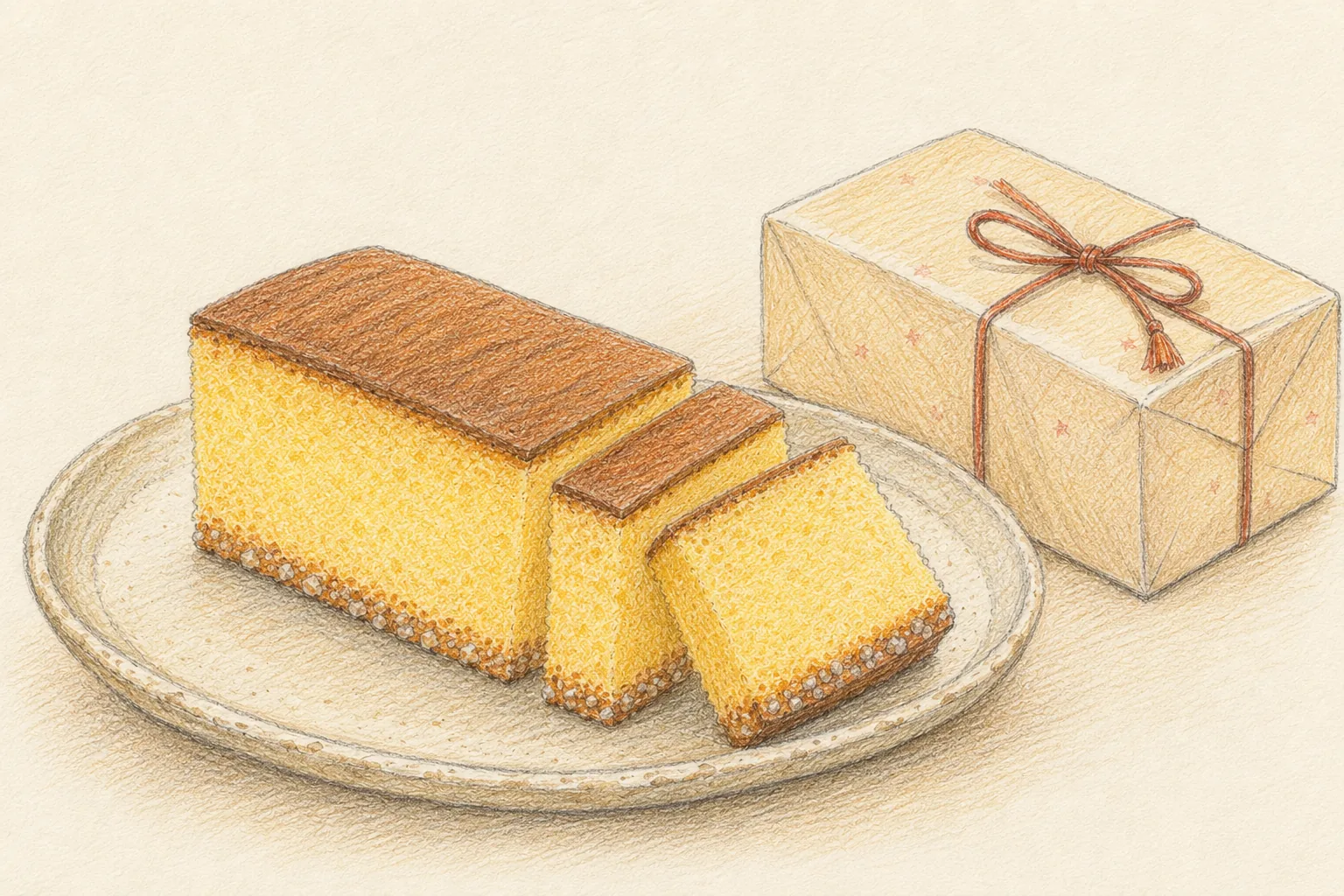
Castella is a moist Japanese sponge cake and one of Nagasaki's best-known specialties. Portuguese missionaries and traders introduced European baked sweets to Japan in the 16th century. Nagasaki's confectioners then adapted the style over generations, using ingredients and techniques available in Japan.
Today, you can find castella across Japan, including in cities such as Tokyo. It is also a popular temiyage — a small gift to bring when visiting someone. In Nagasaki, the useful comparison is between local makers. Many leave crunchy zarame sugar crystals at the bottom, while sweetness, moisture, honey, and starch syrup vary from shop to shop. Two slices can look almost identical and taste surprisingly different.
That distinction matters for planning: Nagasaki is where the local lineage and maker styles are easiest to compare, not the only place to buy the cake.
2. Shippoku Ryori
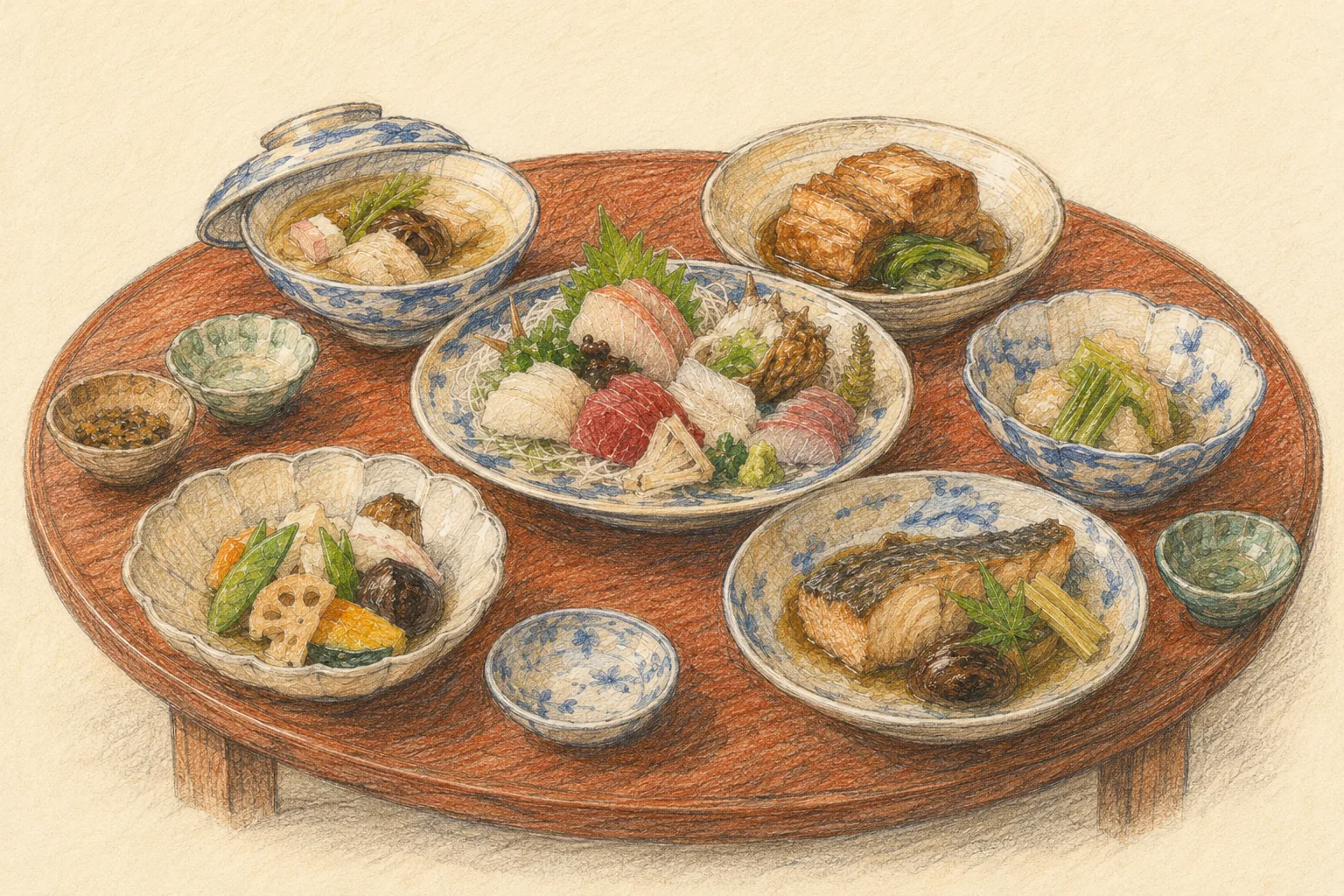
In its classic form, shippoku ryori is a multi-course meal served from shared dishes around a round table. It developed from Chinese-style shared-table dining in Edo-period Nagasaki and later incorporated Japanese and Western-influenced preparations. Its roots are therefore more specific than a simple three-way “fusion” of Japanese, Chinese, and European food.
A full meal commonly begins with a soup called ohire and may continue with sashimi, braised pork, fish, and other seasonal dishes. But the full round-table course is not the only way you may come across shippoku. Some restaurants offer shorter or single-person versions, and a hotel or inn may serve a dish inspired by the tradition.
For a trip, the format matters as much as the name. Treat a full course as an anchor meal and check the current reservation policy, party requirement, and menu length. A mini or single-person version can suit a shorter schedule, but it is not the same experience as the formal shared course.
3. Nagasaki Champon and Sara Udon
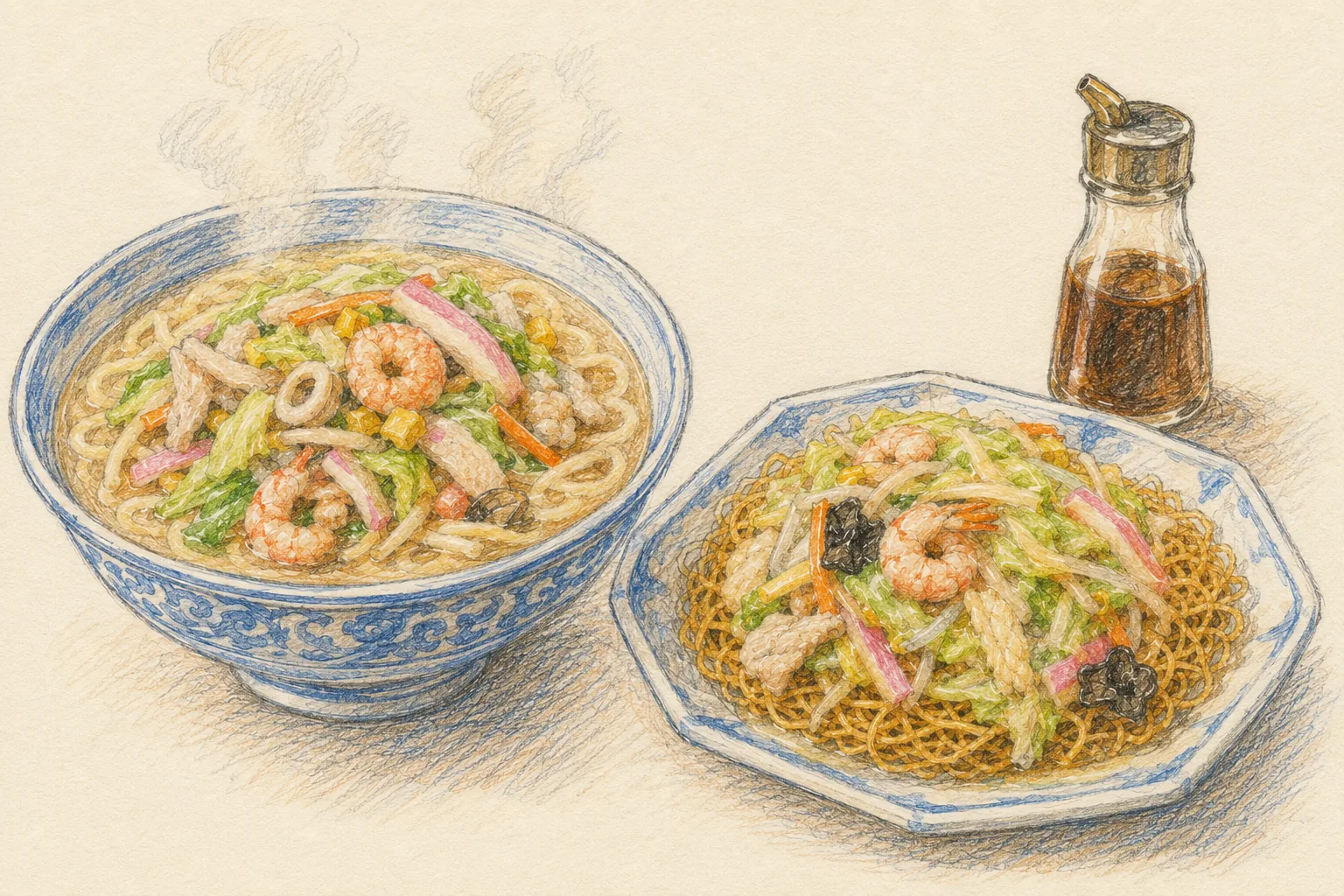
Champon's creation is generally dated to 1899, when it is said to have begun as an inexpensive and nutritious meal made for Chinese students. Pork, seafood, and vegetables are stir-fried; broth and thick noodles are then added and cooked together in the same wok. Unlike most ramen, the noodles usually cook with the soup and toppings rather than in a separate pot.
Recipes vary, so there is no single required broth. Pork- or chicken-based soup is common, along with cabbage, bean sprouts, squid, shrimp, and kamaboko fish cake. The large amount of meat, seafood, and vegetables is the practical point: champon was designed to be a complete, filling meal.
Many champon restaurants also serve sara udon, which began as a brothless variation of champon. Despite its name, it is nothing like a conventional udon dish of boiled wheat noodles served in broth or with a dipping sauce. Nagasaki has two common styles: thick, soft noodles that are stir-fried, and thin, crisp noodles covered with a starch-thickened topping. Adding vinegar or a local Worcestershire-style sauce at the table is a Nagasaki custom.
If you are choosing between the two dishes, first decide between soup and no soup. For sara udon, the next decision is thick and soft or thin and crisp. A menu that simply says “sara udon” can hide that second choice.
4. Goto Udon
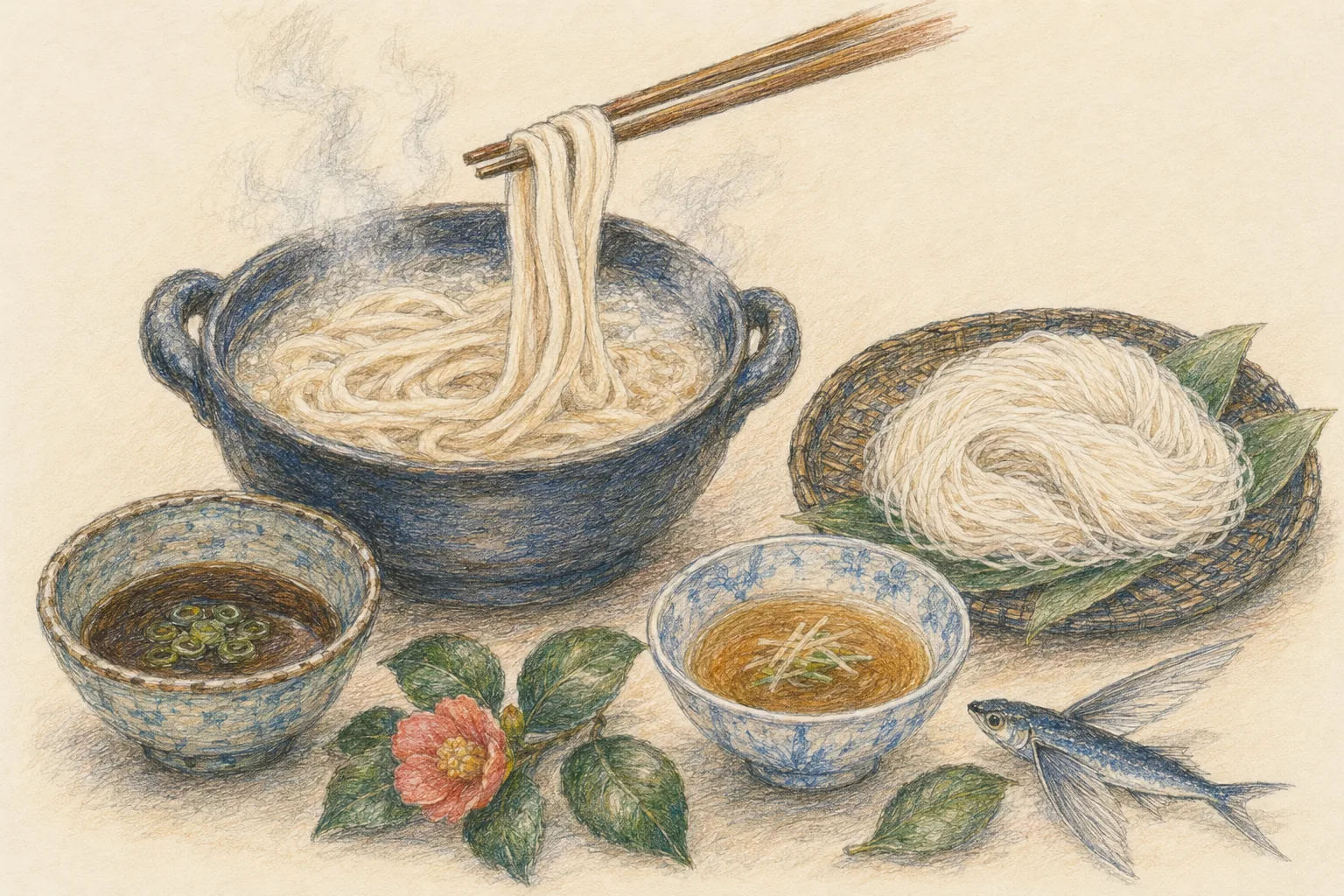
Goto udon comes from the Goto Islands, about 100 kilometers west of Nagasaki Port. The noodles are thinner than most udon and are hand-stretched with camellia oil, a product closely associated with the islands. Accounts of the noodles' earliest origin point toward older maritime links with China, but the exact route and date are not established.
A common local serving style is jigoku-daki: the noodles remain in a hot pot and diners lift them out as they eat, then dip them into a sauce or broth often made with ago, or flying fish. Ago dashi means stock made from dried flying fish. It is closely associated with Nagasaki and is widely used across Kyushu. Egg and other condiments may also be served, depending on the restaurant or household.
Goto udon can be found in Nagasaki city, so tasting it does not require a ferry or flight. The decision is about depth, not permission: a city meal introduces the noodle, while a Goto trip connects it to camellia oil, flying-fish stock, and the island setting that shaped production.
5. Kankoro Mochi
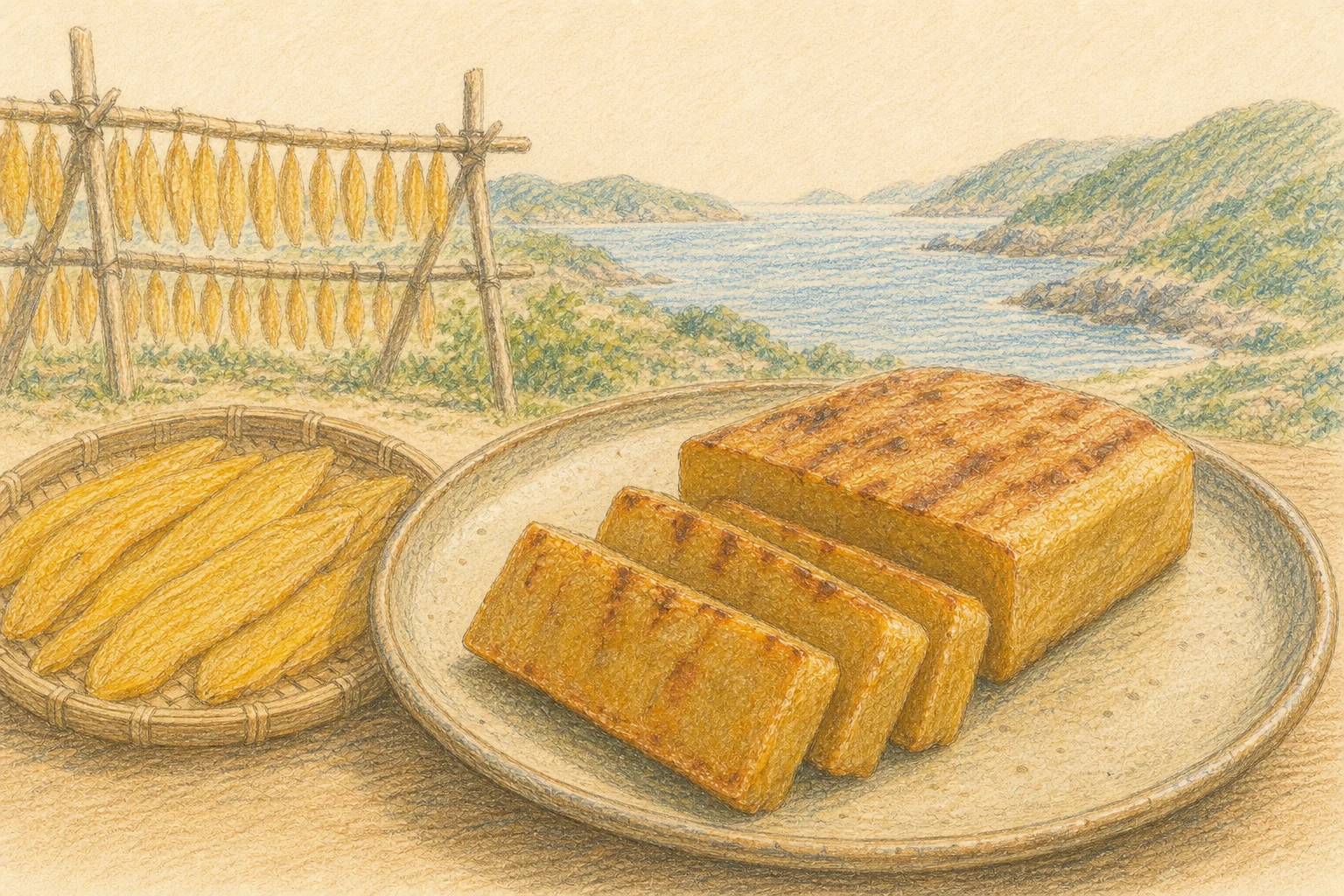
The Goto Islands had little land suited to rice cultivation. Sweet potatoes and other hardy crops therefore mattered, and sliced sweet potato was dried in the sun as kankoro for winter storage. Kankoro mochi mixes that preserved sweet potato with glutinous rice and pounds them into a dense loaf.
The mixture also stretched an expensive supply of glutinous rice far enough for a household. What is now sold as a sweet often contains added sugar, but its older logic was practical: preserve the crop, use less rice, and make enough food for the family.
Packaged kankoro mochi is available beyond the islands, so it can be tasted without adding Goto to the trip. Pairing it with Goto udon clarifies the choice: go to the islands when the relationship among limited cropland, preservation, camellia, and sea routes matters more than simply collecting two specialties.
6. Shimabara Gu-zoni
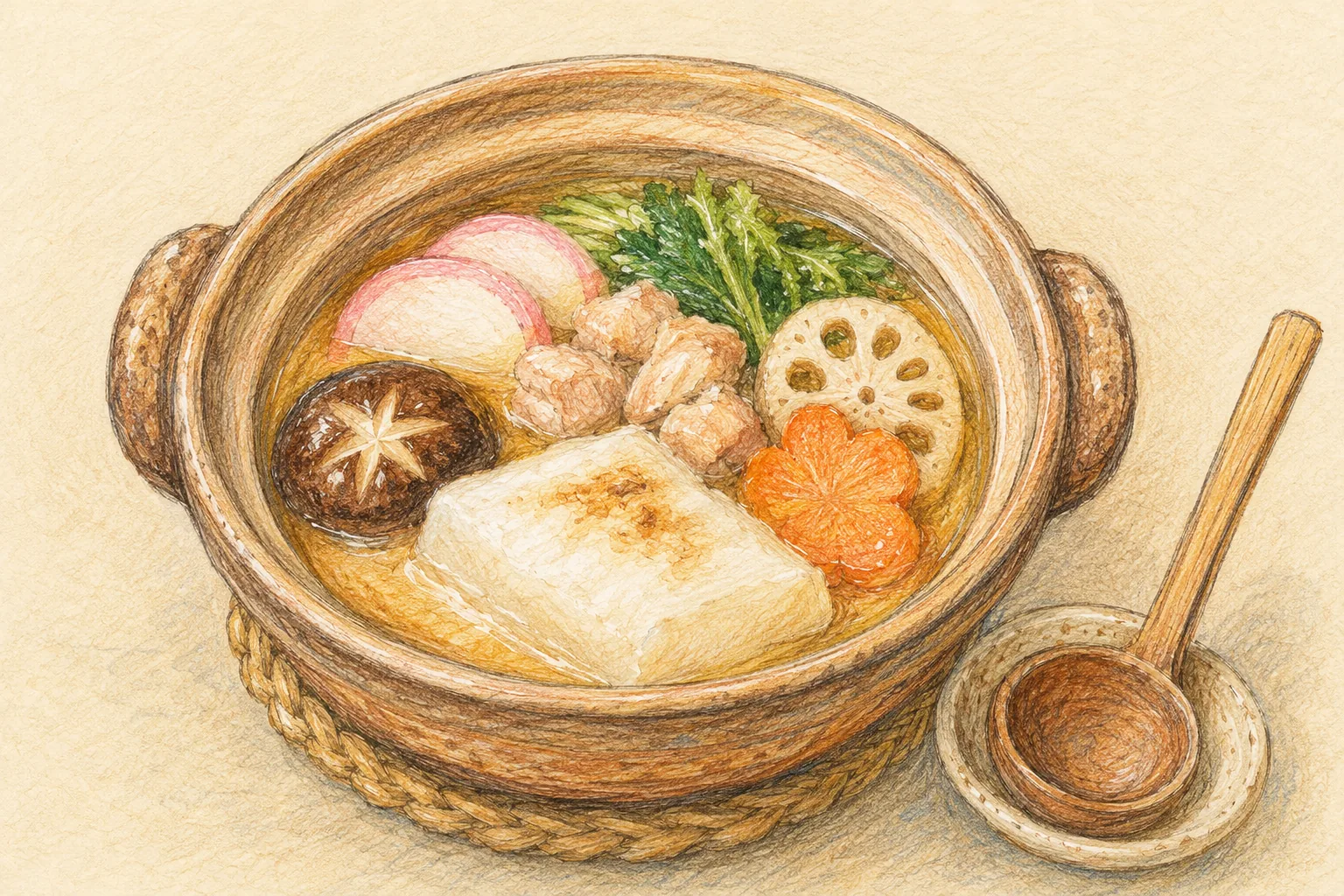
Zoni is a soup containing mochi rice cakes, eaten around New Year across Japan. Shimabara's gu-zoni is a particularly substantial version, usually cooked in an earthenware pot with chicken, fish cake, root vegetables, greens, and other ingredients. Recipes differ by household and restaurant.
Local tradition links the dish to the Shimabara-Amakusa Rebellion of 1637–1638. According to the story, Amakusa Shiro and people besieged at Hara Castle cooked mochi and available ingredients together to sustain themselves. It is best understood as a local origin story rather than securely documented history.
Gu-zoni remains associated with New Year and other celebrations, while some restaurants on the Shimabara Peninsula serve it throughout the year. If the dish is part of the reason for going, check current availability before building the day around it.
7. Kanzarashi and Shimabara's Spring Water
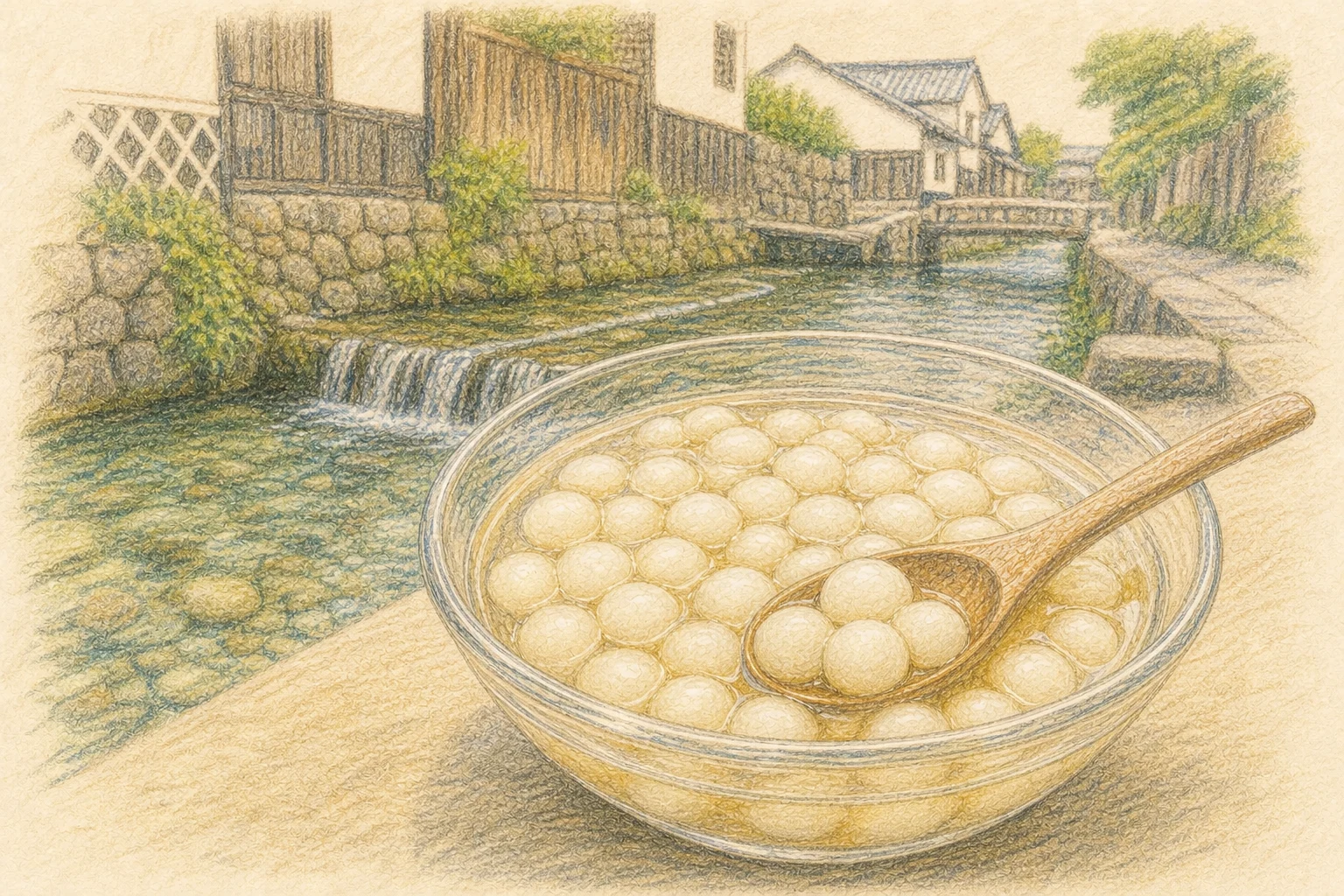
Kanzarashi is a simple Shimabara sweet: many small white rice-flour dumplings cooled in water and served in a light syrup made with sugar or honey. The name is associated with the old practice of preparing rice flour around Daikan, the coldest part of the traditional calendar.
Its connection to place is visible rather than abstract. Clear groundwater emerges around Shimabara and runs through channels, ponds, and former residences. Local accounts connect the sweet to the use of that spring water and to sugar that was once valuable enough to make the dish a form of hospitality.
Unlike gu-zoni, kanzarashi is offered by many businesses in the city and can be paired naturally with a walk through the spring-water district. If gu-zoni availability is uncertain, kanzarashi still gives the peninsula leg a direct food-and-land connection; some facilities also offer advance-booked making experiences, whose current schedule and price should be checked separately.
8. Mogi Biwa
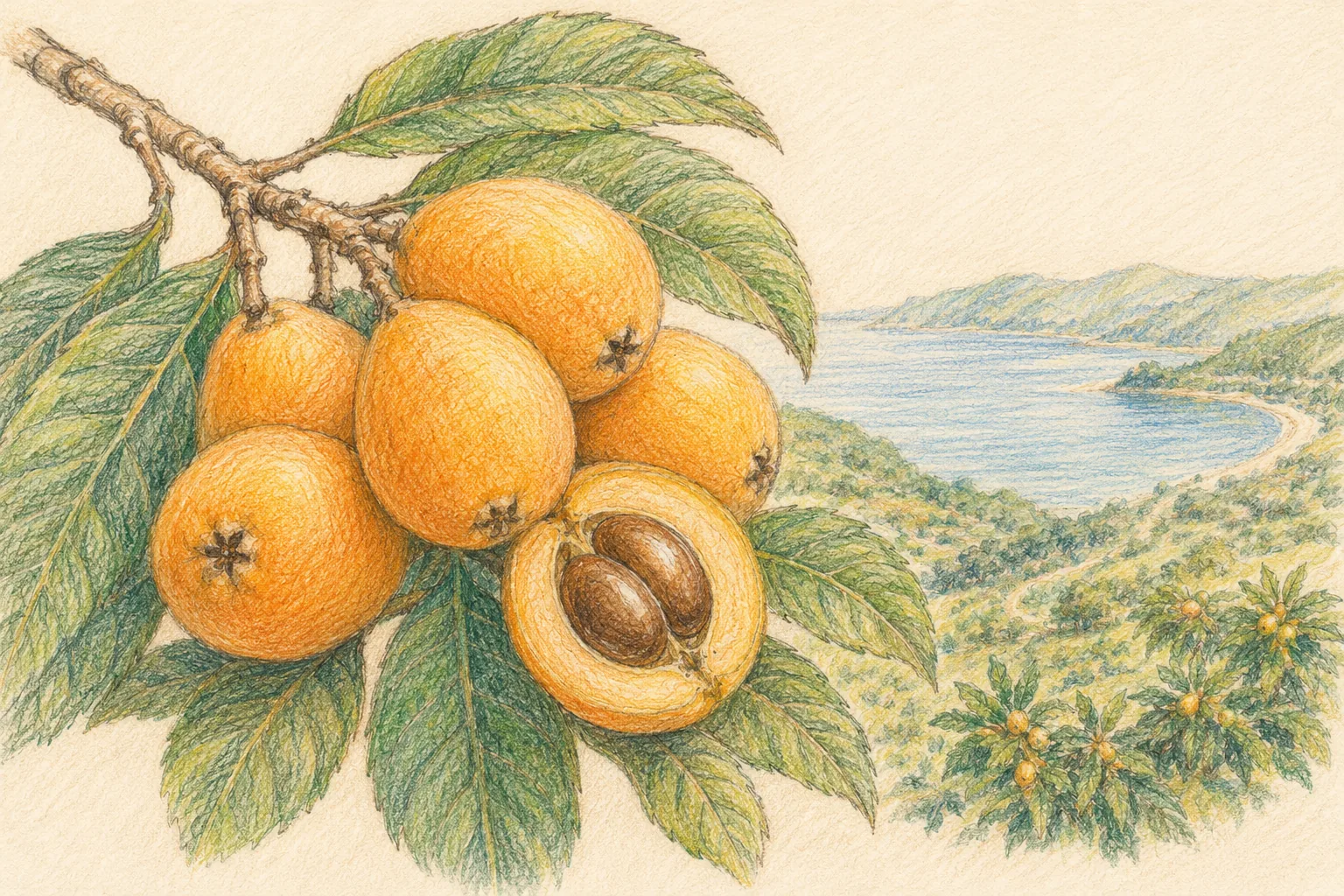
Biwa means loquat: a delicate orange-gold fruit with large seeds and a short fresh season. Mogi lies southeast of central Nagasaki and faces Tachibana Bay, not Nagasaki Bay. Its mild coastal climate and steep, well-drained slopes support loquat orchards, and Mogi gave its name to one of Japan's well-known loquat varieties.
Outdoor-grown fruit is generally harvested in May and June, while greenhouse-grown loquats can appear earlier. The exact timing changes with the weather, and the fruit bruises easily, so fresh availability is brief. Outside the harvest season, you may still find its flavor in juice, jelly, jam, or sweets, but that is a different choice from planning around fresh fruit.
Turn the structure into a plan
- City stay: Keep the first three sections together. Decide whether shippoku will be the planned meal, then fit champon, sara udon, and castella around it as everyday meals or short comparisons.
- Goto leg: Read the udon and kankoro mochi together. One connects the islands to camellia oil and maritime exchange; the other explains what limited cropland and winter preservation changed in everyday food. Both can be tasted elsewhere, so add Goto when that setting is worth the extra travel leg.
- Shimabara leg: Gu-zoni and kanzarashi support different plans. Check ahead if the festive soup is a priority; use the widely available sweet to connect a spring-water walk with local food.
- Fresh biwa: Let the season make the decision. May and June are the general outdoor harvest window; outside it, do not build the plan on finding fresh fruit.
This is a planning model, not a prescription. Its main job is to stop “Nagasaki food” from collapsing into one port-city checklist.