Winter Travel in Hokkaido Depends on Roads and Connections
Introduction
When planning winter travel in Hokkaido, check the roads and connections along the way as well as the distance. Sunshine at departure may give way to snow beyond a mountain pass. Ice and blizzards affect roads; on public transport, the services available after a delay affect when you arrive.
Suppose a journey allows 20 minutes to change services, but the first service arrives 30 minutes late. If another departure follows shortly, you can wait. If you have missed the day's last service, you may need to rethink how to reach your accommodation. The same 30-minute delay has different consequences.
This is an illustration, not a description of a particular route. Distinguishing the planned arrival time from the transport still available when plans fail helps identify difficult winter connections.
1. Snow depth does not tell you how easy a road is to use
Snow depth is only one changing road condition. Ice can make the surface slippery, snow piled beside the road can narrow the usable width, and a blizzard can make visibility as important as the surface itself.
| Road condition | Effect on travel |
|---|---|
| Ice on the surface | Tires lose grip more easily |
| Uneven surfaces and ruts | Driving differs from a smooth road |
| Snow accumulated at the edges | Less width remains for traffic |
| Poor visibility in a blizzard | Vehicles ahead and the course of the road become harder to see |
Temperature and wind, passing traffic and snow clearance all change these conditions. The same road differs between morning and midday, or before and after clearance. Adding a fixed percentage to a summer journey time cannot fully account for winter travel.
2. Moving snow aside and carrying it away
Snowplows move fresh snow toward the roadside before vehicles compact it. Uneven surfaces may also need to be scraped and leveled.
Snow pushed aside remains there. As the banks grow, machines push them farther out or use rotary blowers to recover road width. Where storage space runs short, especially in built-up areas, trucks carry snow away.
One pass by a snowplow cannot keep a road in the same condition all winter. New snow brings more work. Keeping roads usable involves vehicle inspection and maintenance and snow transport as well as driving the plows.
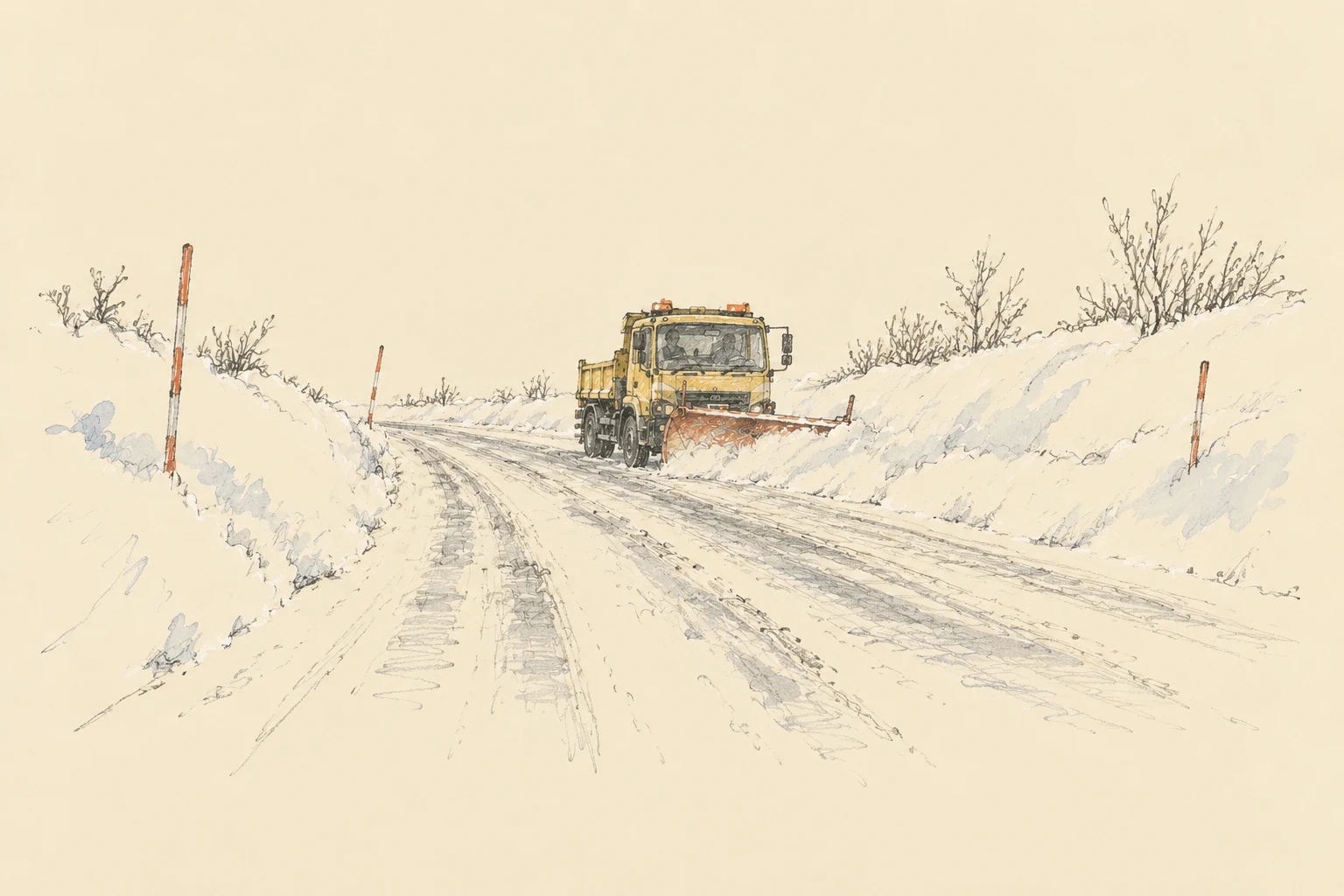
Continued clearance needs people and machines. Aging equipment, recruiting operators and allocating limited budgets have become winter road-management concerns. With crews unable to work on every road simultaneously, management must consider each road's role and use.
Main roads carry food and fuel as well as commuters and students. A lightly used road can also be crucial if no alternative exists. Maintaining winter roads involves both snow-removal techniques and decisions about which roads to maintain at which level.
These present-day practices cannot simply be projected onto older winter roads. Shin Sapporo Shishi records that part of Odori was formally designated for snow disposal in January 1889, while compacting snow on the road in front of each house was apparently the more common approach at the time. The work of keeping roads usable has changed over time.
3. Variable arrival times affect connections
Travel times vary from day to day. Even if the average is the same, a wider spread of arrival times is a reason to leave more time before the next commitment.
In the opening example, the 20-minute interval is only the start. When is the following service? Is this the last departure? Must you move between boarding points? Can you still reach your accommodation if the connection fails? Two journeys each involving “one change” can differ substantially.
Work and medical appointments may have inflexible times. Not everyone can leave earlier or add an overnight stay. A visitor's flexible itinerary and transport residents can use every day need to be considered separately.
4. Between cities, then onward locally
The Sea of Okhotsk coast at Abashiri involves different journeys from the wetlands and Akan area reached through Kushiro. Both are in eastern Hokkaido, but connecting the two regions combines travel between cities with further local journeys.
Railways, buses and airport transport may publish separate timetables and service notices. Services appearing in one itinerary can have different operating days, reservation requirements and cancellation arrangements. A change in the first arrival time can change which onward services remain available.
On roads, the weather at the starting point and destination does not describe every section between them. Snowfall and restrictions at mountain passes also affect the journey, so travel time between the same cities can vary from day to day.
5. What road, weather and service reports describe
Hokkaido road information reports matters such as road restrictions, while Japan Meteorological Agency disaster information describes weather conditions. Operators' notices concern the operation of individual services. Each reports a different condition of movement that a timetable alone cannot show.
Maintaining road width and surfaces and connecting rail and bus services involve work in different places. Snow clearance, vehicle maintenance and operation sustain travel between cities; the day's road conditions and the availability of another departure together affect the time needed to reach a destination.
References
- 北海道地域総合振興機構『北海道の交通体系展望』2011年3月、181頁。ISBN 9784863810389. CiNii Books
- 山下克彦・平川一臣編『日本の地誌3 北海道』朝倉書店、2011年。ISBN 9784254167634. CiNii Books
- 札幌市教育委員会編『新札幌市史 第2巻 通史2』札幌市、1991年、1047頁。 札幌市中央図書館目録 pp. 188, 1006. Snow clearance section. Historical context for the Meiji period.
- 椎橋俊之『ドキュメント北海道路線バス―地域交通最後の砦』筑摩書房〈筑摩選書0300〉、2025年3月。ISBN 9784480018182. 出版社
- 土木研究所寒地土木研究所「安全で信頼性の高い冬期道路交通サービスの確保に関する研究」研究開発プログラム報告書、2017年度。https://www.pwri.go.jp/jpn/results/report/report-program/2017/pdf/pro-14.pdf
- 北海道開発局札幌開発建設部「除雪」。Fresh-snow clearance, surface leveling, road widening, and snow removal by truck.